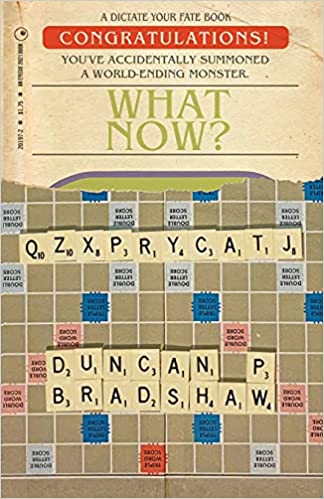
Are you frustrated with your mundane existence? Fed up spending day-after-day drinking hot, milkybeverages, endlessly pressing ‘refresh’, and chowing down on copious amounts of biscuits and/or cake? Do you yearn for a world (or even a taste) of excitement and wonder? Then you’re in luck!
A former summer camp caretaker, horribly burned from a prank gone wrong, lurks around an upstate New York summer camp bent on killing the teenagers responsible for his disfigurement.IMDB
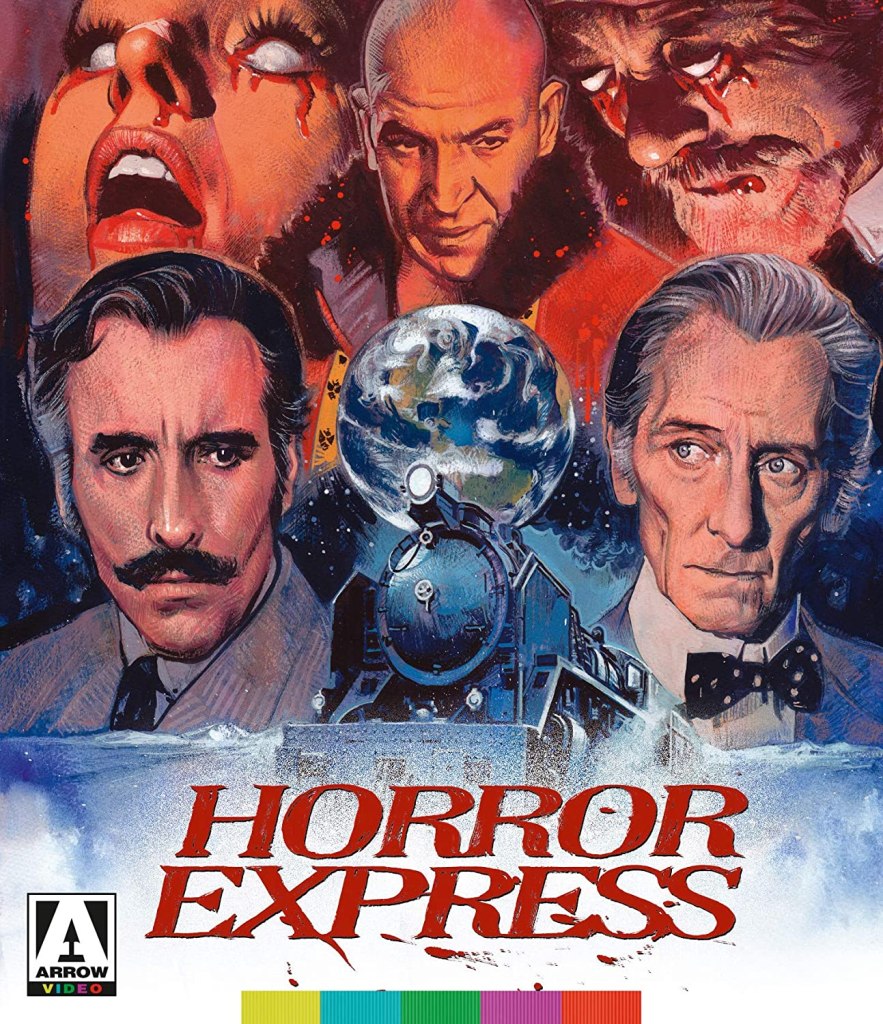
So, confession time – I had never seen The Burning before watching it recently. Yep, I know it is a classic and know about Cropsy (Lou David) but it is one that I just have never gotten around to watching. I thought it was about time, so grabbed a copy in a recent ARROW sale, along with Horror Express and Theatre of Blood which I have also recently reviewed.
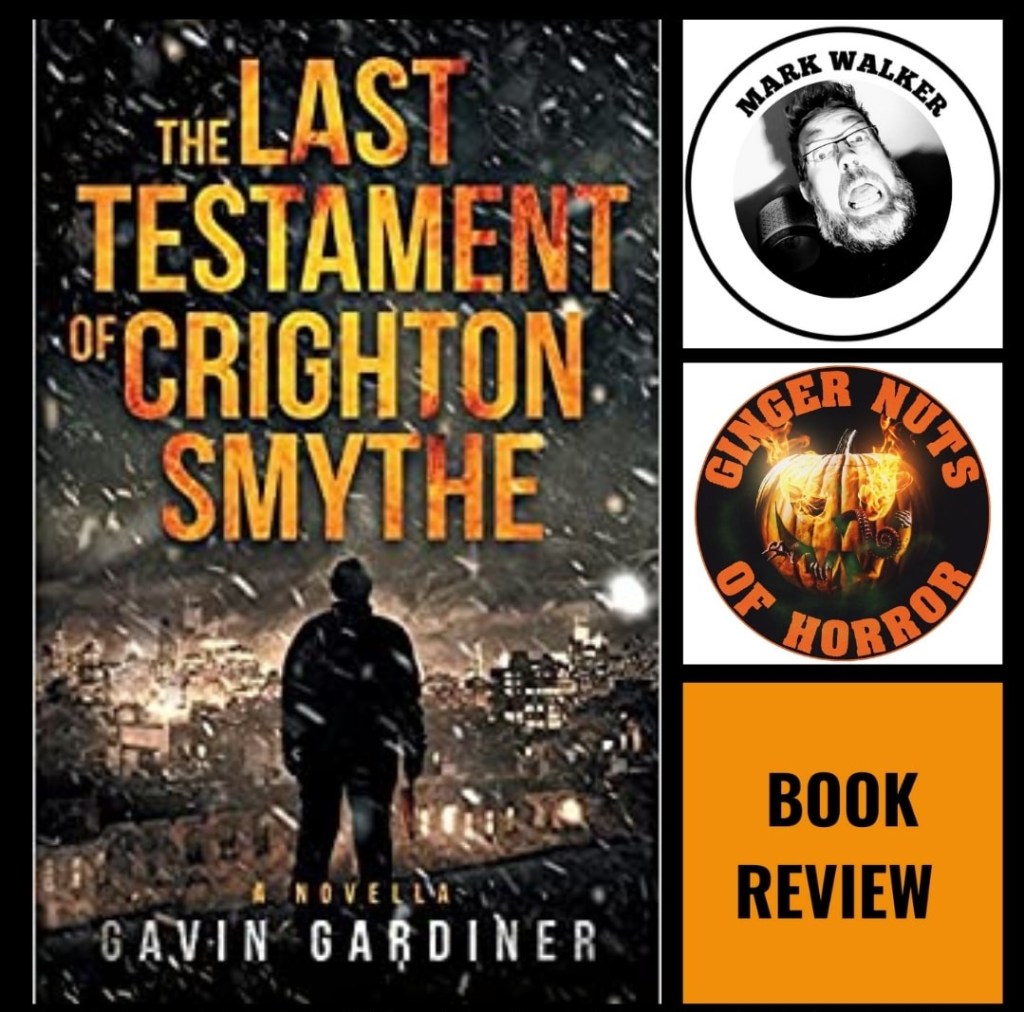
Crighton Smythe could see how everyone was going to die – except himself. A social outcast who relied on his mother to keep him, Crighton had to use his ‘knack’ to his advantage when Mrs Smythe took ill and financial pressures began to mount. But as his visions started to increase in intensity, and his hatred of the city around him began pushing him to his limit, he found himself wondering how much more he could take.
Then he died.
In his own words, let Crighton Smythe tell you the story of how he perished. Where is he now?
Discover for yourself.
‘it’s the journey, not the destination,’ and Gardiner takes us on a short but crazy journey into a troubled mind, giving us a glorious glimpse into the disturbing world of Crighton Smythe. Join us, if you dare! But bring your own butter.
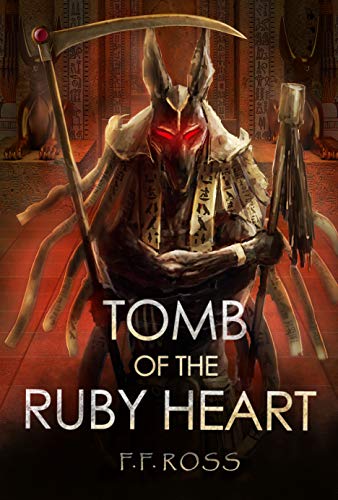
Under the Mountain of Anubis lies a dark evil. Mortals disturb it at their peril. When the anxious son of an archaeologist confronts utter terror, will he end up trapped and buried alive?
Originally published on Mark Walker Screenwriting and Stargazing on 24th November 2020
A trip down memory lane and the fun and games we had putting together a book of bedtime stories for Christmas in a matter of days! Some of the links have been removed as they are no longer active but, if you like the sound of the book, it is still available as we head into the Christmas Season at Amazon.
Originally posted on Mark Walker Screenwriting and Stargazing on 14th July 2016.
A number of old links to other archived posts have been removed as they no longer work. They mostly related to posts about the Pixar Rules of Story which I may well re-post over the coming months.
It’s just another day on a busy highway until everything comes to a screeching halt. The jam tails back forever. But there’s no cause for concern, no reason to panic. It’s a traffic jam, that’s all. Everything will get back to normal soon enough.
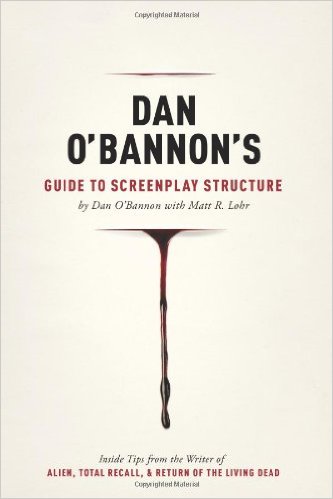
Released, sadly, after O’Bannon’s death in 2009, his Guide to Screenplay Structure was a book I was keen to read, coming from the mind of the man who had been instrumental in the development of some classic screen stories, such as ALIEN, DARK STAR and TOTAL RECALL. Regardless of the stories behind bringing ALIEN to the screen, I was intrigued to get inside the mind of O’Bannon and I wasn’t disappointed.
O’Bannon’s style is fairly relaxed and friendly and I enjoyed reading the book for that reason. I found it a lot less stuffy than some of the more “formal” screenwriting tomes I had waded through prior to this. Although he presents this book as an alternative to other screenwriting formulas, and is very open that this is his interpretation of how to write a screenplay, there are similarities between many of O’Bannon’s approaches and these other formulas. Indeed, in one chapter, where he gives his impression of other writers’ approaches, from Aristotle to Field and McKee, he is wise to acknowledge that there are links between all the different approaches and formula used in the screenwriting process.
A number of classic scripts, including Citizen Kane, Casablanca and Some Like it Hot, are also analysed, breaking each down into its component parts and exploring different aspects of the different approaches.
The book is full of exercises designed for the reader to explore some of the concepts and systems that O’Bannon discusses in each chapter.
Essentially, at the heart of the book, and O’Bannon’s writing, is conflict. He describes a screenplay as a fight and I liked his way of looking at it. Drama creates conflict and conflict should be at the heart of every story. When you boil your screenplay down, if it isn’t about conflict, then O’Bannon is not convinced it is even a story. And, while he talks about this a lot throughout the book, he also touches on classic aspects of screenwriting such as the 3-ACT Structure, exposition and screenplay length.
The one thing that really stuck with me after reading this book though was O’Bannon’s use of the Hedonic Adaptation Effect.
Put simply, this is about the way people react to extreme change or a prolonged situation (good or bad) through a dulling-down of the situation’s effects, allowing people to adapt to that change and the new world they are taken into. Within a film, this is closely linked to plot twists and turns and Horror is probably a good example of how this can be used to raise the stakes throughout the development of the plot.
Early on, a writer may introduce their monster via a shocking scene, jolting their character(s) out of a status quo, shaking up their complacency (very much like an inciting incident). As they adapt to this change, the writer may use this time to deliver some exposition and allow the audience to come to terms with what just happened and what is going on in the onscreen world. As soon as the characters and the audience have adjusted and become accustomed to this new, elevated reality, you can hit them with another twist/shock that bumps them up another level of awareness. And you keep doing this, ideally with more regular frequency, as you speed towards the story close, to keep raising the stakes, increasing the tension and delivering conflict through a series of revelatory shocks. You are, effectively, repeatedly lulling your audience into a false sense of security after a shock, before shaking things up in bigger and better ways.
To be honest, this is probably something that many screenwriters do already, but O’Bannon explains it all in a simple and informal way that, like the rest of his book, makes you feel he is telling YOU personally about his process. If you have been writing for years and read all “the other” books, then O’Bannon’s may not be a great revelation of “anything new” but it is a well written, easy to read exploration of some of the key aspects of screenwriting from the perspective of someone who knows how to write a screenplay. And it’s fun to read.
I’ve been thinking it was time to revisit some classics that I loved as a kid but which I haven’t watched for a while. These are the films that had a real impact on me when I saw them and influenced my love of horror. But are they as good today as they were back then?
Only one way to find out!
And where better to start than with Theatre of Blood, a film that was released the year I was born, for which I have a real soft spot and fond memories of watching many times as a youngster. I can’t remember how long it has been since I watched it, but I think of it often, and it was clearly overdue for a rewatch.
I am not sure how old I was the first time I saw it, but I don’t think I could have been much older than 11 or 12, randomly stumbling across it during a late night illicit TV session. My abiding memories are of the opening and Michael Horden being brutally stabbed to death by a load of drunks and Robert Morley’s unpleasant dinner – two scenes that have stuck with me for over 30 years.
But would they have the same impact now? Would I feel the same watching it nearly 4 decades later?
The short answer is yes, most definitely yes. While many of the scenes turn out to be a lot less graphic than my young mind remembers, they are still pretty horrific in their own way. Where they haven’t changed is in the gleeful black comedy that runs throughout the film.
Theatre of Blood is a wonderfully over the top, gaudy classic that is even better than I remembered it as a kid. Back then, I suspect my main driver for watching it was the opportunity to illicitly watch a horror film and it mattered little whether it was actually any good! Watching it now, with a wiser (I hope) head on my shoulders, I can appreciate it more deeply and fall in love with it all over again.
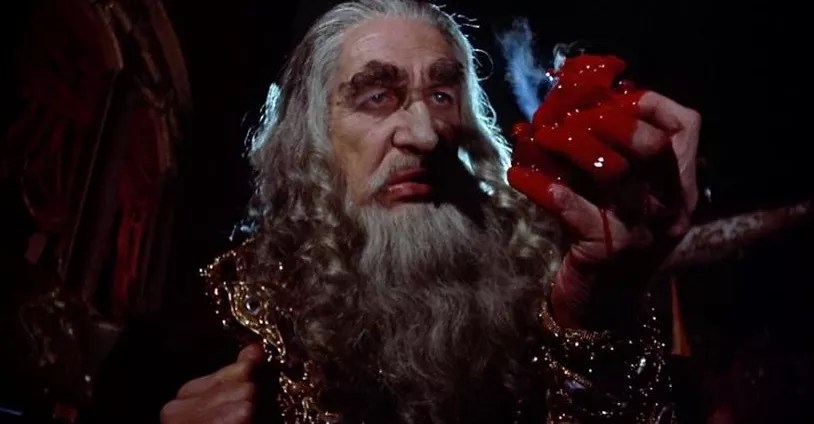
Vincent Price chews scenery as the bitter Shakesperean Actor, Edward Lionheart (great name) seeking pay-back on the circle of critics who beat him down until he tried to take his own life by jumping from the balcony of their riverside offices. He is saved by the local drunks who come to worship him as he plots his revenge via a number of gruesome deaths inspired by the plays of William Shakespeare. I know the film is old, but I won’t go into detail on these as they are inventive and wildly fun, (despite the dark subject matter) and I don’t want to spoil that enjoyment if you haven’t seen the film. This is the very core of Theatre of Blood; it is gruesome, bloody fun infused with an alarmingly wicked sense of humour as well an amazing all star cast, something I didn’t fully appreciate as a kid.
Alongside Vincent Price we have Diana Rigg, Ian Hendry, Harry Andrews, Carol Browne, Robert Coote, Jack Hawkins, Michael Horden, Arthur Lowe, Dennis Price, Milo OShea, Eric Sykes and Madeline Smith. Diana Dors even turns up for a very brief stint as a critics’ wife and Miss Marple herself (Joan Hickson) even gets in on the action. These are all great actors of that era and they all just seem to be having fun. The dark humour that runs through Theatre of Blood is evident as the critics get bumped off but also in the supporting characters. Eric Sykes plays Seargent Dogge whose departure from the film is both disturbing and funny and the most salacious of the critics, played by Harry Andrews is aptly named, Trevor Dickman! The brilliance of Theatre of Blood is the way that it gets you sympathising with Lionheart, rather than the critics, who really are an unpleasant group of arrogant arseholes!
Some of the humour may be a bit dated and Price’s hairdresser, Butch, or Morley’s portrayal of the gay Merridew are very much of their time and probably a bit out of touch for modern audiences. However, the jokes and humour are never spiteful or vicious and it is all at the expense of the deserving critics. Any film that involves a fencing duel across two trampolines, or credits the ‘Choreographer of meth drinkers,’ gets the thumbs up from me. Theatre of Blood knows that it is melodrama of the highest order, and it wrings every drop of fun out of that self-knowing awareness.
It is also chock full of great ideas, and has been a great influence on many film-makers and writers; it’s DNA can be seen coursing through the veins of films like Seven, for instance, where the Seven Deadly Sins replace Shakespeare’s plays to horrific effect. The Blu Ray commentary is delivered by the League of Gentlemen who love the film and have all been influenced by it. Part of me also wants to believe it influenced something like Cannibal Holocaust, although that may just be me enjoying the idea of Deodato watching the gently scored opening of Theatre of Blood and deciding to steal the idea for his film! Both films use gentle, orchestral music which belies the horror that follows, although Theatre of Blood’s grainy black and white stage deaths do foreshadow events a little more than the rainforests at the start of Holocaust.
Theatre of Blood is one of those films you discover as a kid and think you are the only one who knows about it – it is your little secret but, as you get older, and learn more about film and television, you appreciate just how wonderful it is, how influential it has been, and just how many people are in the same boat as you, adoring a classic that was made with such love and care and is truly a classic of the genre.
I will hear no harsh words against it.
I will fight you over it… on a trampoline if I have to!
It’s always going to be a 5/5 for me, possibly boosted by nostalgia, but it is a film I don’t think I would ever get tired of watching.






 Dark Mark Writing